Entity SEO for the Rest of Us: How Boulder, Denver, & Longmont Businesses Can Build Trust with Google
🚀 If you run a small business along Colorado’s Front Range—whether that’s a boutique in LoDo, a fitness studio in Boulder, or a brewery in Longmont—you’ve probably felt how competitive Google search has become.
Not only are there more businesses competing for attention, but Google itself has changed how it decides who deserves to rank. As a result, tactics that worked even a few years ago no longer move the needle the way they used to.
That’s where Entity SEO comes in. More importantly, it explains why some businesses seem to win visibility effortlessly while others struggle—despite doing “all the right SEO things.”
What Is Entity SEO?
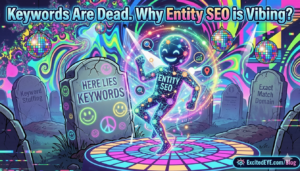
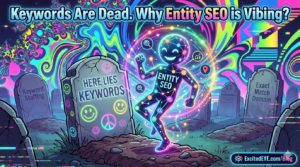
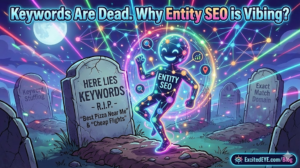
Entity SEO is an optimization strategy that helps Google understand your business as a real-world entity—not just a collection of keywords.
In other words, instead of focusing on how often a phrase appears on your website, Entity SEO focuses on clearly defining who you are, what you do, where you operate, and how your business connects to other trusted entities across the web.
Because of this shift, Google can now evaluate businesses based on meaning, relationships, and authority rather than simple keyword matching.
Why Entity SEO Matters for Local Businesses
First and foremost, Google’s primary goal is to deliver accurate, trustworthy answers. To accomplish that, it must be confident that the business it’s recommending is real, consistent, and credible.
When Google understands your business as a verified local entity, your site becomes eligible for much more than traditional blue-link rankings. Specifically, entity clarity opens the door to:
- Featured snippets
- Local Pack visibility
- Knowledge Panels
- AI-generated search summaries
However, if Google cannot confidently identify your business entity, everything becomes harder. Even high-quality content may struggle to perform because the trust foundation simply isn’t there.
Keywords vs. Entities: What Actually Changed?
For years, SEO revolved around keywords. While keywords still matter, they are no longer the primary ranking signal. Instead, Google now prioritizes understanding.
| Old SEO (Keywords) | Modern SEO (Entities) |
|---|---|
| Exact-match phrases | Real-world business facts |
| Keyword density | Topical authority |
| Isolated pages | Connected entities & relationships |
| “Best plumber Denver” | “Licensed plumbing company serving Denver” |
As you can see, the difference is subtle—but powerful. Entity-based search rewards clarity, context, and completeness rather than repetition.
What Counts as an Entity?
An entity is any unique, identifiable thing that Google can recognize and store facts about.
- People: Founders, professionals, public figures
- Places: Cities, venues, neighborhoods, service areas
- Organizations: Businesses, brands, nonprofits
- Concepts: Services, industries, activities
Accordingly, your business should be treated as a clearly defined organization entity with consistent attributes everywhere it appears online.
Local Colorado Entity SEO: A 3-Step Action Plan
Step 1: Optimize Your Google Business Profile
To begin with, your Google Business Profile acts as your official entity record. In many cases, it is the strongest signal Google uses to validate local businesses.
- Ensure full verification and completeness
- Select the most specific primary category possible
- Post updates and photos consistently
- Keep service areas accurate and current
When this profile is incomplete or outdated, entity trust suffers—even if your website looks great.
Step 2: Maintain Web-Wide Consistency
Next, Google cross-checks your entity information across the web. If it finds conflicting details, confidence drops.
- Use the same business name everywhere
- Standardize address formatting
- Stick to one primary phone number
- Align branding across directories and profiles
Additionally, structured data (Schema markup) helps eliminate ambiguity by explicitly defining your business information in a machine-readable format.
Step 3: Publish Topic-Complete Content
Finally, Entity SEO favors depth over volume. Instead of publishing dozens of thin pages, focus on fewer, more authoritative resources that fully answer real questions.
For example, a climbing gym in Boulder would benefit more from a comprehensive guide to Indoor Climbing in the Front Range than from multiple keyword-stuffed pages.
- Local climbing history
- Equipment and techniques
- Safety best practices
- Related terminology and concepts
By covering all semantically related ideas, you signal to Google that your site is the most authoritative entity on that topic.
How Entity SEO Supports AI Overviews
AI-driven search results rely heavily on trusted entities. Therefore, when your business is clearly defined and consistently reinforced, Google can confidently reference your content.
This allows your site to appear for:
- Conversational searches
- Voice queries
- Long-tail questions
- AI-generated summaries
🚀 Win the Front Range: Final Takeaway
Entity SEO is about clarity, consistency, and authority. While keywords still play a role, sustainable visibility now depends on how well Google understands your business as a real-world entity.
Ultimately, Front Range businesses that invest in clean data, strong profiles, and authoritative content will be the ones Google trusts—and recommends—most often.
Leave a Reply
You must be logged in to post a comment.